
Read the Room
About differentiation, deepening the collection and the unsung spec ed heroes.
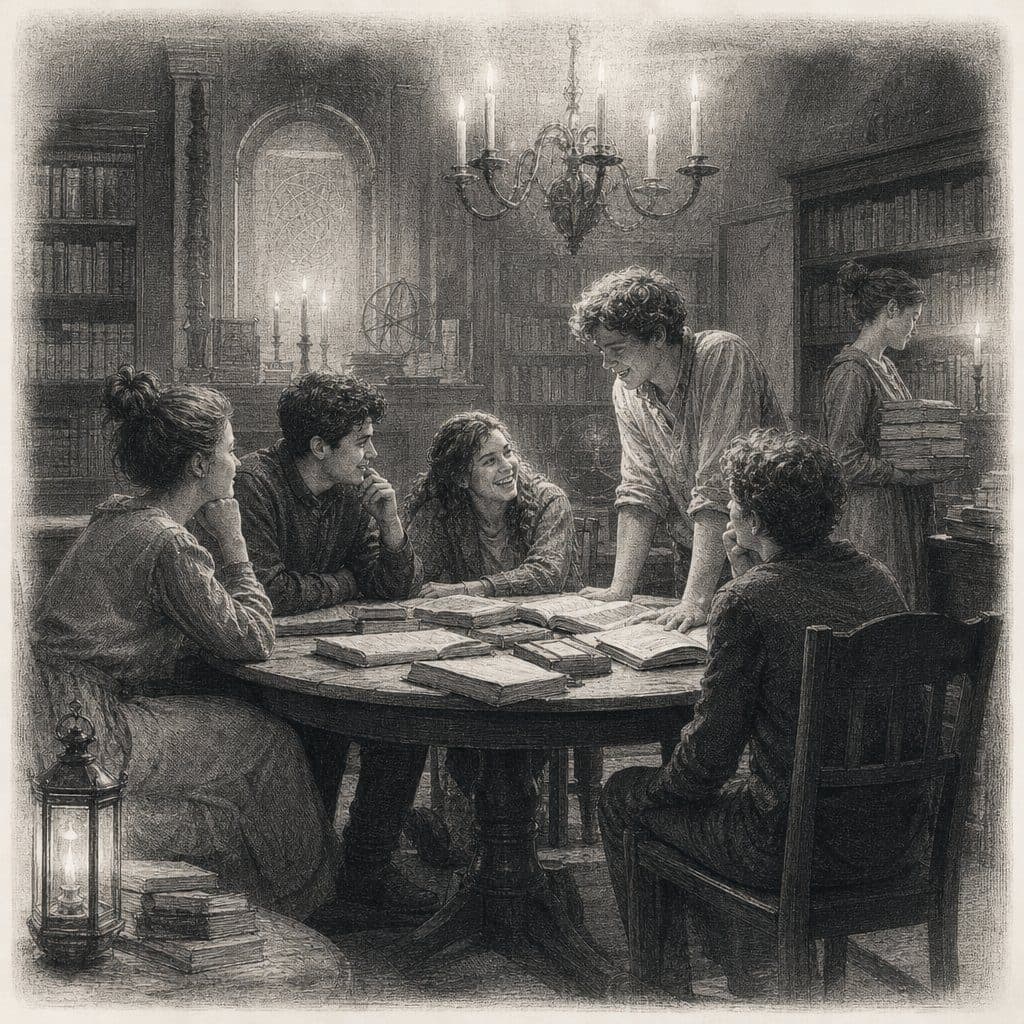
Five versions of the same book can look like a purchasing problem. Until you meet the readers.
The original. A version in modern language. Easyread. A more substantially adapted text. Audio support. The question is whether the version we have works for the reader in front of us.
The Sequel - the Success
I had a class studying Swedish as a second language reading an easyread book together. A bunch of students wanted the sequel. Boys and girls. They wanted to know what happened next.
A librarian’s dream.
Except I did not have enough copies of the version they had been reading. I had some easyread copies, some originals and some more substantially simplified versions. The students most determined to get on with the story took on the original. Others read adapted versions. Two students with dyslexia used an audio-supported version. When they had finished, they met in the library. The students who had read the original filled in details missing from the adaptations. Nobody was judging who had read the easy version. They were talking about characters. About being young. About navigating the people and expectations around you. They had read different versions and could still have that conversation. The extra detail became something to share. Great stories can do that. Have students talking about worlds they will never physically visit, while recognising things from their own lives.
It was BIG. And I got to see it unfold.
Easy in the Brain of the Beholder
Learning Swedish was one thing. Dyslexia was another. They could overlap. They were not interchangeable. The same applies wherever students are learning in a majority language that is not their mother tongue. Swedish happened to be the language of my classroom. A reader may need more familiar vocabulary without needing simpler ideas. Another may want the original wording with audio support. Someone else may benefit from shorter sentences or a more substantially adapted text.
Which version we choose depends on what is getting in the way. Dyslexia specifically involves persistent difficulties with accurate or fluent word reading and/or spelling. The International Dyslexia Association’s 2025 definition recognises variation in severity and across writing systems. Difficulties processing speech sounds and meaningful word parts are common, but not universal.
For me, as a librarian, that means asking what the reader can engage with when the effort of reading the words is supported. It does not automatically send me to the simplest adaptation. Nor does a student’s language background. There is evidence for adapting texts. A 2025 study involving 436 pupils found that simplified German textbook texts were understood better than the originals. The benefit was not confined to pupils with weaker reading skills.That supports having options. It does not tell us which version of a novel to put in a particular student’s hands. We need the student’s input. And sometimes we need help.
Mind the Gap
Offering audio is not the end of the job. If a student is listening while following the printed text, the wording needs to match. Try keeping your place while the narrator substitutes words. Skips a paragraph. Reads a different translation. The student has to stop and work out why the recording does not match the page. We have supplied another difficulty along with the support. Check the adaptation, the translation and whether the recording is abridged. Different page numbers are manageable. Missing sentences are a different problem. Then make the pairing findable. Staff and students need to know which audio belongs with which text. “We have the audiobook” is not enough.
Bring the Big Guns
I know books. That does not make me an expert in every difficulty someone may have reading them. Special educators bring knowledge I need. So do language teachers. Their expertise should help shape the collection before a student gets stuck. Are we supporting access to a story? Developing vocabulary? Practising word reading? Helping someone participate in the class discussion? A student may need several of these. The materials and support may differ.
A 2026 randomized trial involving 314 children tested text-supported audiobooks with and without individual instruction. In that trial, children classified as poor readers gained book-specific vocabulary only when the audiobooks were paired with one-to-one support. Results also varied by socioeconomic background. Access alone did not produce the same learning gains for everyone. Trained undergraduates delivered the individual support. A speech-language pathologist helped design it, trained the facilitators and monitored their work. Specialist knowledge informed what happened, even when the specialist was not delivering every session.
That is the kind of collaboration I mean. Advice we can act on. Training. Someone to turn to. A way to check whether the support is working.
Right in the Pocket
I think of this part of librarianship as project management. Someone has to get the process moving. Find out what a class will be reading. Bring the relevant colleagues in. Work out which versions are needed, source them and check that the materials work together. Then follow up. Did they help? That can be my job without every answer being mine.
And I have been too slow.
More than once. Too slow to respond, to involve someone, to get the right support into place. A student’s sudden determination to find out what happens in part two is an opportunity with a shelf life. No library can buy every title in every version. The case is for choices informed by actual readers and the people who understand their needs. In my class, limited copies helped shape what happened. It worked. I am proud of that. I would still rather have the right options ready next time.
The Infrastructure of Magic
That conversation in the library felt like magic. But I cannot build a collection policy around hoping it happens again. The infrastructure of magic needs to be in place. The versions. The matching audio. The expertise. The time. Somewhere to meet and talk. The work starts well before the students arrive to discuss the ending.
As we get ready for three weeks on the East Coast, visiting expos and library district fairs, this is one of the questions I’m taking with me: how do you get that infrastructure in place before the reader needs it? I’ll be showing what we’re building at Ossus, but I also want to hear where your own arrangements work, where they get stuck, and what you wish someone had thought to ask sooner. Come find us. I have a few things still to learn.
Notes
- Footnote 1.International Dyslexia Association. Definition of Dyslexia, revised 2025. https://dyslexiaida.org/definition-of-dyslexia/ ↩
- Footnote 2.Bormann, S., Reggentin, R. & Böhme, K. (2025). Einfache Sprache = einfache Texte? Effekte von Textentlastung auf die Textverständlichkeit von Schulbuchtexten. ↩
- Footnote 3.Olson, H. A., Ozernov-Palchik, O., Arechiga, X. M. & Gabrieli, J. D. E. (2026). Remote Text-Supplemented Audiobook Intervention Supports Children's Explicit and Incidental Vocabulary Learning. ↩
Filed under
- Field Notes
- library science
- text adaptation
- dyslexia
- audiobooks
- language learning
- school libraries
- collection management
- weeding
- inventory
Librarian
A librarian who wrote her dissertation on integrated library systems, and now helps build one. She is making sure the shift to AI is threaded with care, so it works for librarians and the communities they serve, not in place of them.