
Is There Really A Reading Crisis?
Sweden still scores above average in reading, and that is exactly what the numbers are hiding.
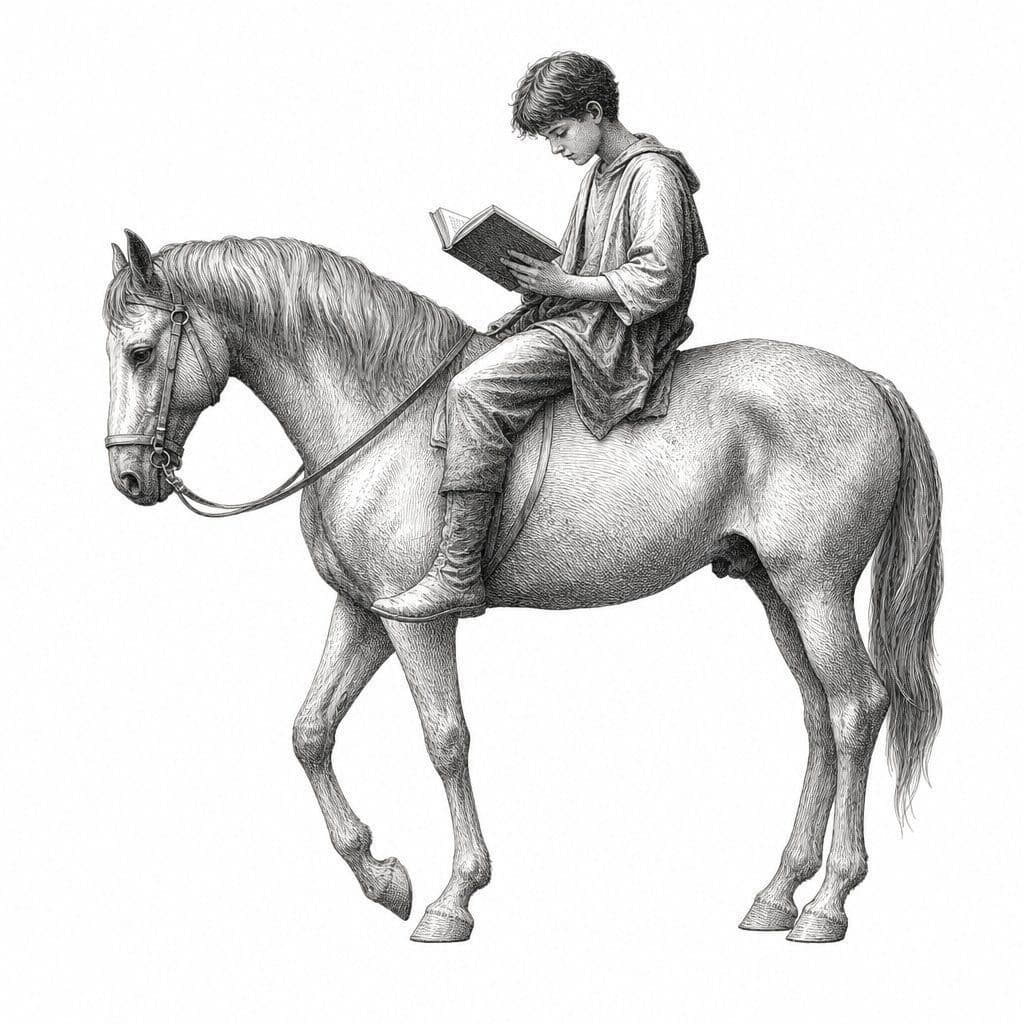
Every few months, someone points to the latest PISA numbers and says: see, we're fine. Sweden still scores above the OECD average in reading. Nothing to see here - just move on. I want to push back on that, gently but firmly, because "above average" is doing a lot of quiet work to hide a much messier picture.I would rather lead with figures supported by PISA, Swedish 15-year-olds' reading scores fell from 506 in 2018 to 487 in 2022 — a 19-point drop, among the steepest in the OECD, in a country that used to be considered a European benchmark for literacy. Yes, 487 is still above the OECD average of 476. But "still above average" is not the same as "fine," and it's not the same as "improving" for sure. For comparison, PISA data show the US barely moved over the same period — 504, essentially flat since 2018 — while the OECD-wide average fell by 10 points. Sweden's drop wasn't in tune with the rest of the pack - it was sharper than that.[1]
So — is there a crisis?
I think the honest answer is: it depends which students you're asking about
The easy villain in this story is the tablet. Sweden went all-in on classroom digitalization, making digital tools a mandatory part of the national preschool curriculum by 2019, and its reading scores kept sliding.[2] The Ministry of Education has reversed course since — "from screen to print," pulling back on mandatory digital tools since 2025 and pouring roughly $200 million into textbooks. A neuroscientist at the Karolinska Institute has said it plainly: using only digital tools appears to hinder rather than strengthen learning.[3]
But here's the detail that complicates the simple "screens broke reading" story, and it's the detail I think matters most: the decline wasn't spread evenly. Scores for Sweden's highest-achieving students stayed relatively stable. It was low-achieving students, and students with an immigrant background, whose scores fell hardest.[4] If screens alone were the culprit, you'd expect the damage to show up everywhere, evenly. It didn't. That points to something layered underneath the technology story — inequality, language access, and how well (or badly) new tools were rolled out to the kids who already had the least support. And the gap is not small. According to PISA, the average reading gap between immigrant and non-immigrant students in Sweden was 81 score points in 2022 — up from 63 points in 2012. That gap has been widening for a decade, tablets or no tablets.[5]
A Derailed Train of Thought
I've seen it up close, and it isn't abstract. One example that's stuck with me: a reading comprehension test that described a small town, mentioning a street called Railroad Avenue. One of the questions asked, "Based on the information given, is there a train passing through this town?" — with three options: A. Yes, there's a train. B. No, it's not mentioned. C. There could potentially be a train. It was unsettling how many students chose B — simply because the word "train" never appeared in the text.That's not a vocabulary problem. It's a problem with separating what you know from what you assume. Reading between the lines — catching sarcasm, irony, implication, the things a text doesn't say outright — is a skill, and it withers exactly like any other skill when it isn't exercised - much like a muscle. And I don't think it's a coincidence that it's weakening at the same moment kids are spending more of their attention on ideas that are built to reward the fastest, most literal reading of a text.
Not a Class Act
Such a huge gap (81-point gap) between immigrant and non-immigrant students, or a widening split between the "hills" and the kids from the "wrong side of the tracks", is not a natural fact of literacy. It's an educational failure. Kids who arrive at school already behind — in language, in access to books at home, in having someone read to them before they could read themselves — need more support to catch up, not the same support as everyone else. When we let "the average looks fine" cover for that, we're quietly deciding some kids' reading struggles matter less than others'. That's simply unacceptable. Sweden's own government has since called this what it is — a läskris. And making school libraries a staffed, legal right for every child, starting in 2025, is one part of finally answering it.[6]
Liberté, Égalité & Fraternité
This week, France's parliament passed a law banning under-15s from social media and banning phones in high schools — making it the first EU country to go this far.[7] Existing accounts are cut off from January 2027; new accounts are blocked from this September.[8]I believe this is a good and overdue move - not just for France. Platforms are being sued over teen suicides linked to their content,[9] and the evidence that they are designed to be maximally hard to put down is no longer seriously questioned.But — and I want to hold this thought carefully — a phone ban doesn't teach a kid how to piece together that a street called Railroad Avenue implies a train. It removes one source of distraction; it doesn't build the stamina of sitting with a text long enough to think about what it really means. If we treat the ban as the fix, we'll have solved the wrong half of the problem.Fighting instant gratification isn't nostalgia for a paper-and-pencil past — it's about protecting kids' capacity for independent thought, their ability to sit with something unclear or difficult and reason it out themselves instead of reaching for the fastest available answer. A phone ban can facilitate it. It can't fill the space on its own - thinking that is simply naive.
People Are The "FloorFiller"
This is where I'll say the thing I actually believe, plainly: the fix is investment in humans, not just putting the lid on technology.More than fifty years of research, across more than sixty studies, all show that students with access to well-equipped school libraries staffed by certified librarians perform better academically[10] — what made me stop in my tracks is the gap-closing effect.I love the study from Pennsylvania which shows that students with a full-time certified librarian had reading scores that were higher at every level, and the gains were largest exactly where the gaps are widest: 5.5% fewer Black students, 5.2% fewer Latino students, and 4.6% fewer students with disabilities tested below basic level in reading, compared to 1.6% fewer students overall.[11][12] That's not a rising tide lifting all boats evenly — it's a targeted correction, aimed at the kids the system was failing hardest.
The library as the equaliser. Égalité.
A librarian doesn't just supervise a room of books. A good one teaches a kid how to sit with a hard text, how to ask a real question, how to tell a good source from a bad one, how to find the thing they didn't know they were looking for. That's not a task you can automate away, and it's not a task a phone ban builds either. It has to be taught, by someone, and it takes time. Time and commitment.
An Act of Freedom
All of this — PISA, gaps, bans, librarians — can make reading sound like an exercise, a ticking of boxes. I don't want to end there, because that's not why reading matters to me, and I don't think it's why it should matter to any of us.Reading is one of the cheapest, most democratic ways a person gets to try on a life that isn't theirs yet — to meet an idea, a place, a version of themselves they hadn't imagined, and decide whether they want to reach for it. That's not a class issue either, or it shouldn't be. A kid's access to that shouldn't depend on their zip code, their parents' education, or whether their school could afford a librarian this year. Reading for joy is how hope gets built — how a kid figures out what they might want, who they might become, before anyone's told them what they're allowed to want. Reading as the equaliser. Égalité... and the freedom to choose. Liberté.
The Restorative Curl
One more thing PISA has tracked for years, almost as an aside to everything else: school loneliness. It rose in 36 of the 37 countries measured between 2012 and 2018, with nearly twice as many adolescents reporting elevated loneliness by the end of that period.[13] A 2025 WHO report found teenagers are now the loneliest age group in the world — higher than any other, at nearly 21% — and that lonely teens were 22% more likely to get lower grades.[14]We're meant to be social creatures, and most of us are surrounded by more "connection" than any generation before us — and yet more of our young people say they are lonely than ever. I think it's worth being precise here: being alone and being lonely are not the same thing.
Solitude, chosen, is where a lot of reading actually happens — it's restorative, not a symptom. Loneliness is involuntary, and it corrodes. A kid curled up with a book by themselves on a Sunday afternoon isn't the problem we should be worried about. A kid who has no one to talk to about what they read, no librarian who noticed what they were drawn to, no place that felt like it was theirs — that's the actual crisis, and it's a quieter one than a falling test score, but I'd argue it's the more urgent one and at the end of the day it's a question of belonging and of fraternité.
Sources
- OECD, PISA 2022 Results (Volume I and II) – Country Notes: Sweden and United States, oecd.org
- Worldcrunch, "Screens In Classrooms? A Serious Swedish Debate Spreads Worldwide," worldcrunch.com
- Open Magazine, "Why Is Sweden Ditching Screens for Books, and What Happens Next," openthemagazine.com
- Jun Nonaka, critical-thinking analysis of Sweden's academic decline, note.com
- OECD, "Introduction and Context: Education in Sweden" and "Immigrant Background and Student Performance," PISA 2022 Results (Volume I), oecd.org
- Government Offices of Sweden, "Från och med i dag har alla elever rätt till bemannade skolbibliotek," regeringen.se
- NPR / Associated Press, "French Lawmakers Approve a Sweeping Social Media Ban for Children Under 15," npr.org
- France 24, "'Major Step Forward': French Lawmakers Approve Social Media Ban for Children Under 15," france24.com
- Al Jazeera, "French Parliament Passes Social Media Ban for Under-15s," aljazeera.com
- Center for American Progress, "Investing in School Libraries and Librarians to Improve Literacy Outcomes," americanprogress.org
- Kappan Online, "Why School Librarians Matter: What Years of Research Tell Us," kappanonline.org
- ERIC, "How Pennsylvania School Libraries Pay Off: Investments in Student Achievement and Academic Standards," eric.ed.gov
- ScienceDirect, "Worldwide Increases in Adolescent Loneliness," sciencedirect.com
- EdWeek, "Teens Are the Loneliest People in the World, a New Report Finds. Why?," edweek.org
Notes
- Footnote 1.läskris — literally "reading crisis." The term used by Sweden's own Ministry of Education and Research in announcing the 2025 school library law — an implicit admission, from the government itself, that the problem this post opens with is real ↩
Filed under

Librarian
A librarian who wrote her dissertation on integrated library systems, and now helps build one. She is making sure the shift to AI is threaded with care, so it works for librarians and the communities they serve, not in place of them.