
A Gamechanger?
Games are moving into one of Swedens most literary rooms, and the borrowing data is hard to ignore.
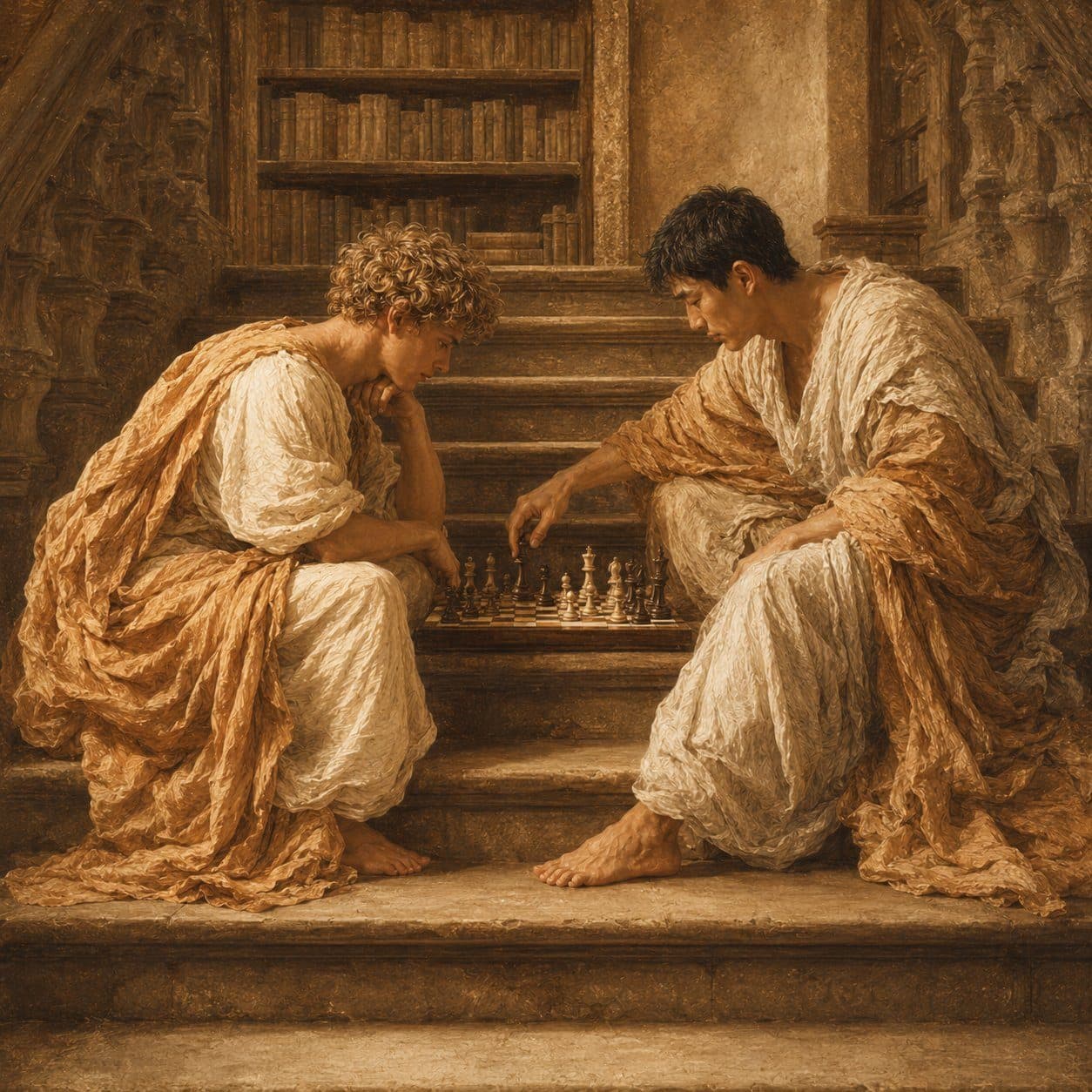
Games and books are usually cast as rivals for students' attention. But what if a little gaming could encourage them to borrow more books, perhaps even twice as many? This September, games are moving into one of Sweden's most literary rooms. For the first time, Bokmässan in Gothenburg has made games one of its official themes. At a book fair.
You can almost hear the bookshelves shifting nervously.
The choice has already prompted the familiar question: what do games have to do with books?
Quite a lot, I would argue. Both ask us to enter another world, understand its rules and make sense of a story. The difference is that games make our participation visible. We progress, discover, collect, choose and receive feedback. A book does many of the same things inside the reader, but it does not flash a small congratulations when we reach page 100. Perhaps it should.
The Number That Made Us Look Twice
We have some small gaming elements in our own product. They are not intended to turn the school library into Fortnite, and nobody receives extra lives for returning a book on time. They simply borrow a few ideas from games to make progress, exploration and participation more visible. When we looked at our own data we quite enjoyed what we saw. Students who engaged with these gaming elements interacted 84% more and reserved 63% more books.
As someone who has spent years trying to get books into students' hands, this is the kind of numbers I want to frame and hang on the wall. As someone who has also spent years working with information, I know better than to do that without asking what it actually means. This is an association. It does not prove that the gaming elements caused students to borrow more. Students who already like books may be more likely to use playful library features. Frequent borrowers may encounter more opportunities to participate. Age, class, teacher involvement and the enthusiasm of the librarian may all matter. Still, these numbers are difficult to ignore.
We Are Not the First to Notice
Borrowing a book can feel like a small action to an adult. For a reluctant reader, it may contain an unreasonable number of decisions. Where do I begin? Which shelf do I approach? Is this book too difficult? Is it childish? Will someone judge my choice? What if I choose the wrong one and do not finish it?
A good game rarely places a player in front of the final boss without preparation. It offers a first step, then feedback, then another step. The player learns the world by moving through it.Small gaming tools can do something similar in a library. They can turn an intimidating room full of choices into a series of invitations: try a new genre, find something on a particular subject, share a recommendation or simply come back.
None of this is especially new. Teachers and librarians have used reading challenges, stamps, stickers, summer reading programmes and class competitions for generations. "Gamification" is partly a modern word for an old instinct: make progress visible, and people are more likely to notice that they are progressing. The technology is not the important part. The invitation is.
We Are Not the First to Notice
More than a decade ago, the University of Huddersfield introduced Lemontree, a game connected to real library activity. Students could earn points and badges for borrowing and returning books, visiting the library, writing reviews and using electronic resources. The purpose was not to make the library less serious. It was to make its possibilities easier to explore. Early participants reported using library resources more, although the researchers were careful about the limitations. Participation was voluntary, the evidence relied partly on self-reporting, and whether greater library use led to better academic outcomes would require years of data.
A similar project, LibraryTree, rewarded visits, borrowing, reviews and other interactions. During its first six months, 1,751 students registered and more than 10,000 badges were awarded. The researchers found broad engagement, but also considerable differences between students and academic disciplines. Here's where you should pay attention. There is no single species called "the student," waiting to be activated by the correct badge. Some people enjoy collecting. Some like competition. Others would rather quietly disappear between two shelves and never see their name on a leaderboard. A gaming element can open the library door for one student and make another step away from it.
Designing for engagement therefore requires the same thing librarianship has always required: knowing who is standing in front of you.
The Reward Trap
There is also a more uncomfortable concern.What happens when the points stop?Research on motivation has long distinguished between doing something because it is rewarding in itself and doing it to receive an external reward. If we pay a child, metaphorically or literally, to borrow a book, do we accidentally teach them that reading is work that deserves compensation?A 2024 meta-analysis involving 35 interventions and 2,500 participants found that gamified learning had a positive but small effect on students' intrinsic motivation. It found stronger effects on feelings of autonomy and relatedness, but only a minimal effect on perceived competence. Relatedness stood out most of all, considerably more than autonomy or competence, which suggests that what moves students may have less to do with the game mechanics themselves, and more to do with feeling seen, or part of something, while playing.
That is both encouraging and sobering.
Gamification can help students feel that they have choices and that they belong. Those are not trivial outcomes. But a progress bar cannot teach reading comprehension. A badge cannot build stamina. A leaderboard cannot notice that a student keeps choosing books that are too difficult because they are too embarrassed to ask for help. There is also a risk that the reward becomes the activity. If the only reason to borrow is to collect points, removing the points may remove the behaviour. What looked like a reading habit may have been a temporary route through a reward loop. This is why the distinction between meaningful play and decorative points matters. The game should point towards the pleasure, confidence and independence found in the real activity. It should not become a toll booth placed in front of it.
The destination is still the book.
Borrowing Is Not Reading
There is one more complication in our own result. Borrowing twice as many books is not the same as reading twice as many books. It does mean that twice as many choices were made, twice as many books crossed the desk and twice as many opportunities entered a student's bag.
You cannot fall in love with a book you never meet.
But circulation data cannot tell us whether the book was finished, understood, enjoyed or quietly returned after travelling to and from school unopened. It cannot tell us whether a student discovered a new author or simply learned how to maximise points.
So this result gives us a direction for the next questions.
- Does the increase continue after the first curiosity has worn off?
- Do students explore a wider range of books?
- Does the effect differ between established readers and students who rarely borrowed before?
- Most importantly, does a playful first step eventually become a self-directed reading habit?
Those answers will take longer than a game round.
One More Page, One More Turn
Years ago, I dated a game developer. At the time, the way he spoke about gameplay seemed quite separate from how I thought about reading. He talked about rhythm, curiosity, challenge and the delicate balance between giving a player enough direction to continue and enough freedom to feel that the discovery was their own. Thinking back, the similarities are obvious.
The most memorable games are not memorable because they awarded us points. They are memorable because, for a while, we lived inside them.
A good game makes the world outside it go quiet.
You look at the clock and discover that midnight became two in the morning without asking permission. Readers know the feeling. "One more turn" and "one more chapter" are close relatives, both promises we make when we have no real intention of stopping.This is the part of gaming that badges and leaderboards struggle to capture. The mechanics may get someone started, but the feeling keeps them there. The sense that there is always something just beyond what you can currently see.
Books and games create that depth differently. A game asks you to act inside its world. A book asks you to construct the world yourself. Both can produce the rare experience of being so absorbed that effort no longer feels like effort.
Our early data suggests that small gaming elements may help more students take the first step towards that experience. The existing research gives us reasons to believe the effect is real, and equally good reasons to remain careful about what we claim for it. Perhaps that is what a responsible gamechanger looks like. Not a tool that replaces the librarian, the book or the slow work of becoming a reader.
Just a small nudge at the right moment, making the first move feel possible.
There is an old saying: you can lead a horse to water, but you cannot make it drink.
Perhaps gaming can lead a student to the shelf, but it cannot make them read. What happens next still depends on the book, the reader and, very often, the librarian who knows how to bring them together. But get that match right, and the next time the student looks at the clock, it may already be two in the morning.
Sources
- Barr, M., Munro, K., & Hopfgartner, F. "Increasing Engagement with the Library via Gamification." (LibraryTree study)
- Walsh, A. "Playing Games with Learning? Gamification and Library Orientation." (University of Huddersfield's Lemontree system)
- Li, L., Hew, K. F., & Du, J. (2024). "Gamification enhances student intrinsic motivation, perceptions of autonomy and relatedness, but minimal impact on competency: a meta-analysis and systematic review." Educational Technology Research and Development, 72(2), 765–796.
Filed under
- Field Notes
- gamification
- libraries
- reading habits
- student motivation
- book fairs
- sweden

Librarian
A librarian who wrote her dissertation on integrated library systems, and now helps build one. She is making sure the shift to AI is threaded with care, so it works for librarians and the communities they serve, not in place of them.